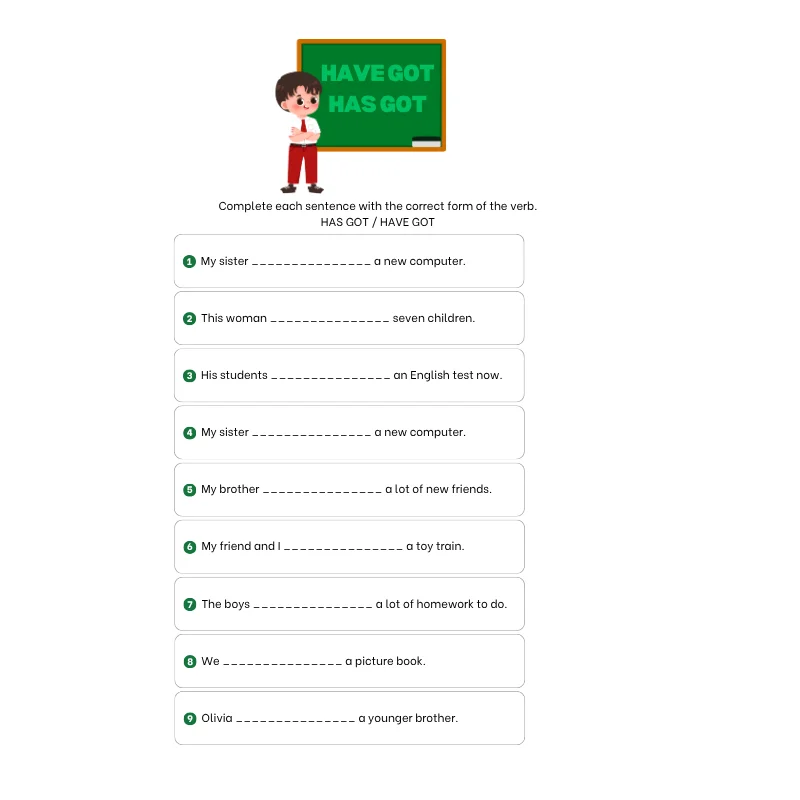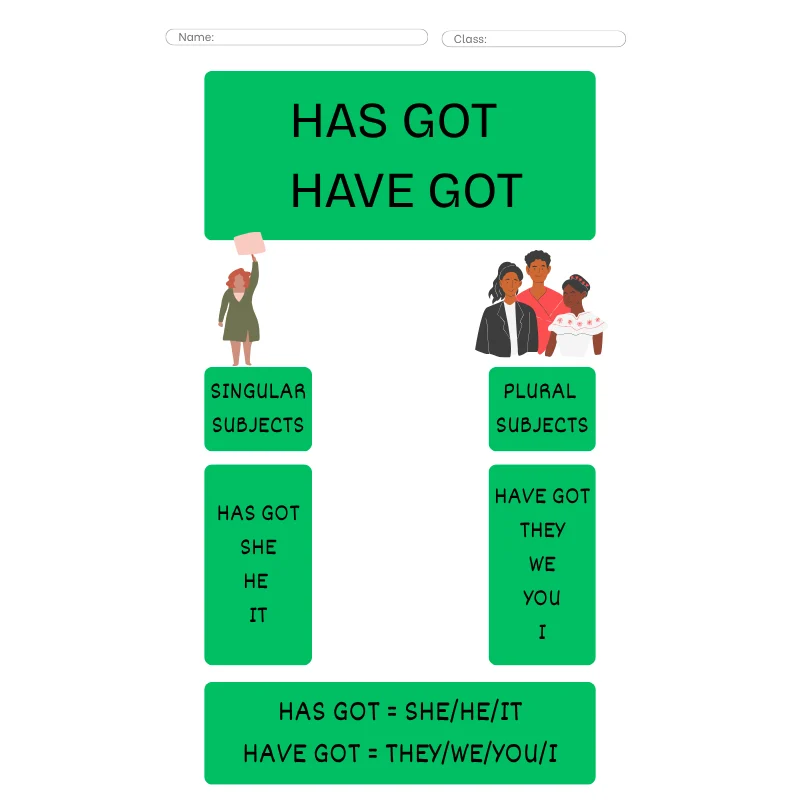

HAS GOT / HAVE GOT

10 kr

Årskurser:
Åk 3 Åk 4 Åk 5

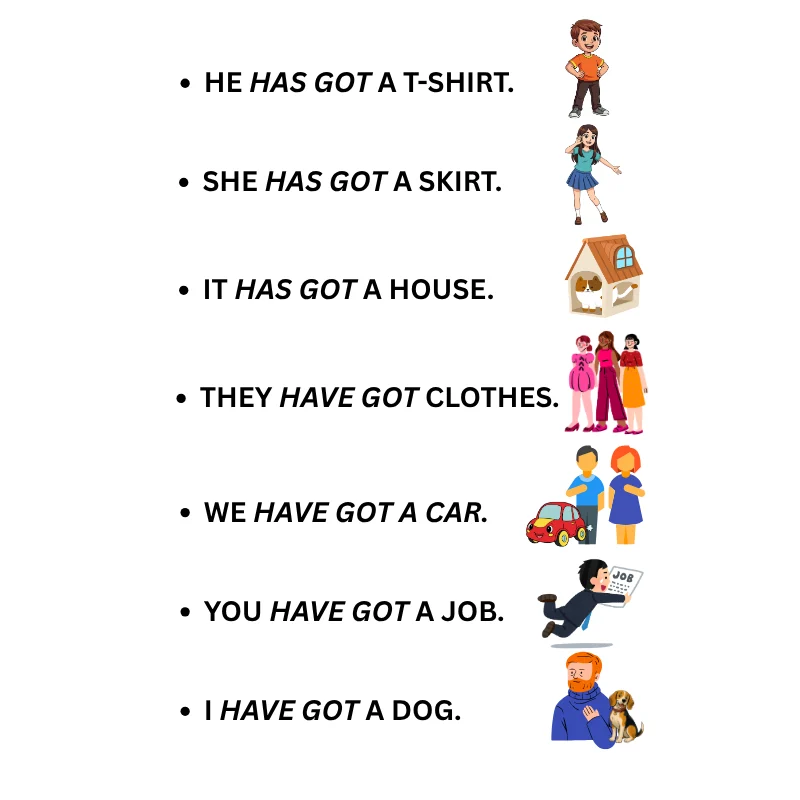
The phrases "has got" and "have got" are both used in English to indicate possession or to describe a state of being. "Has got" is used with third-person singular subjects (he, she, it), while "have got" is used with first-person (I, we) and second-person (you) subjects, as well as third-person plural subjects (they). Here are some examples: Has got: She has got a new car. Have got: I have got a meeting at 10 AM. Both forms are informal and commonly used in British English, while "have" is often preferred in American English for formal contexts.   If you need more specific examples or explanations, feel free to ask!

Filinformation

PDF · A4

Kvalitetskontrollerat för utskrift i A4

Teaching ”has got” and ”have got” to children can be both fun and engaging! Here’s a creative approach to make the learning process enjoyable:


Introduction to ”Has Got” and ”Have Got”

Start by explaining that ”has got” and ”have got” are used to show possession, meaning something belongs to someone. Use simple language and relatable examples.


By incorporating these engaging methods, children will not only learn the difference between ”has got” and ”have got” but also enjoy the process!
Taggar:
beginner EnglishEnglishenglish activitiesenglish activityhas gothave gotsingular och plural