
Adjectives can be modified to express different degrees of comparison: positive, comparative, and superlative. Here’s a brief overview:
Positive Degree
This is the base form of the adjective, used to describe a quality without comparison.
- Example: tall
Comparative Degree
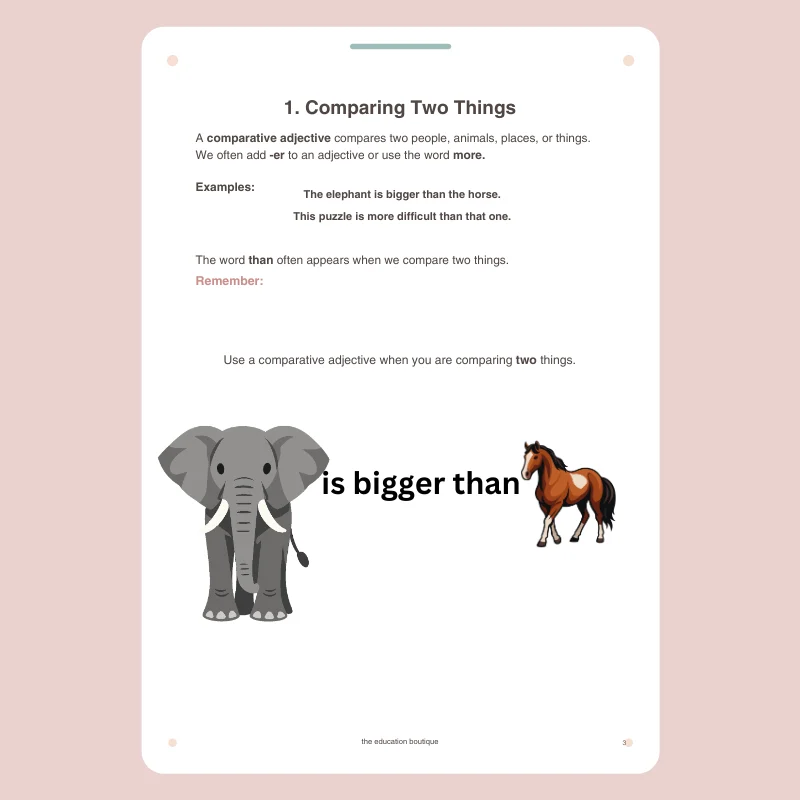
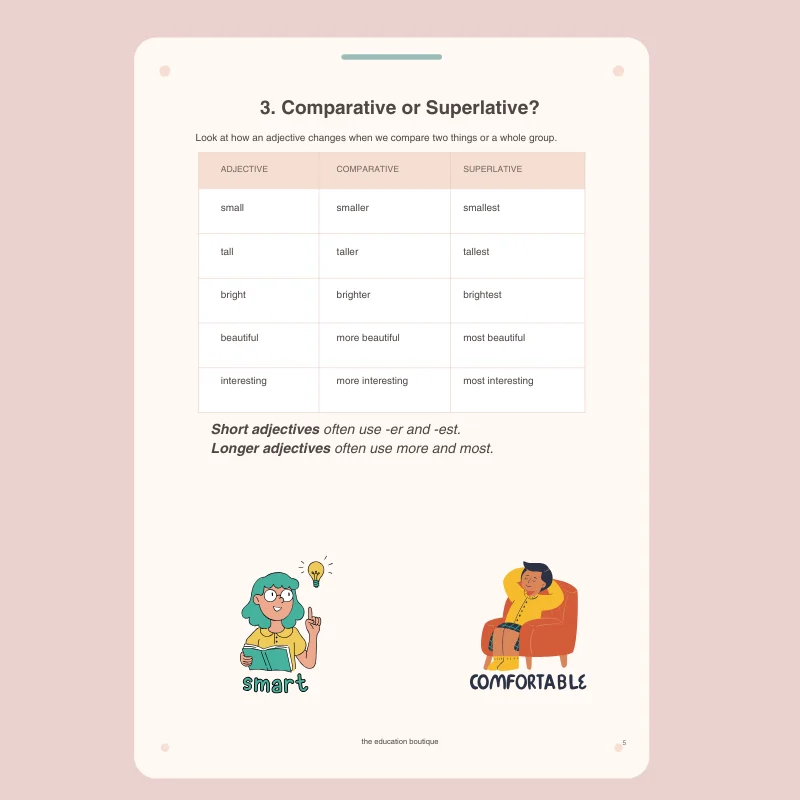
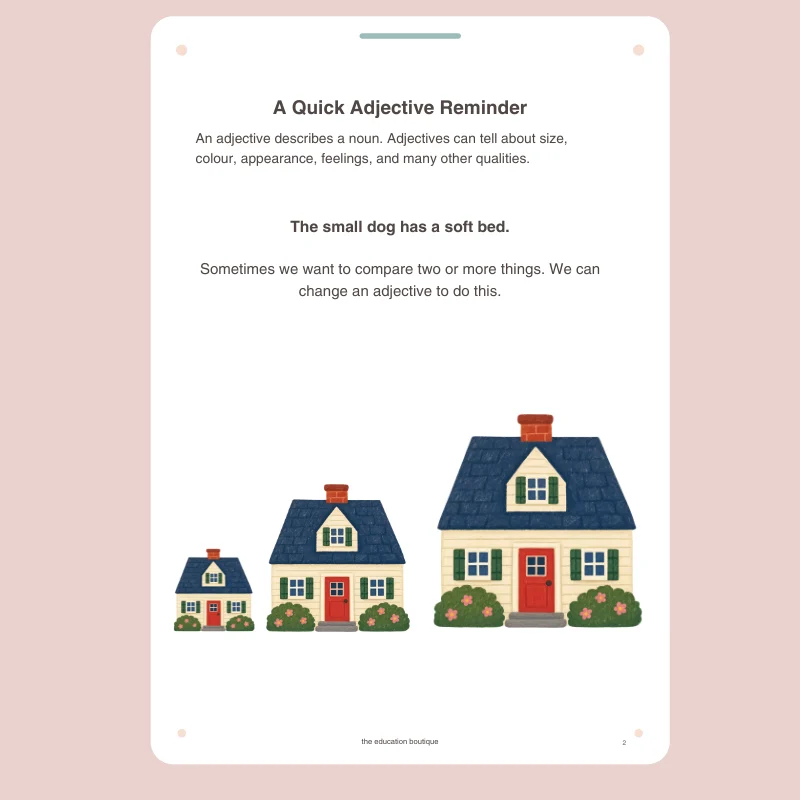
This form is used to compare two things, often formed by adding ”-er” to the end of the adjective or using ”more” before it.
- Example: taller (from tall)
- Example: more beautiful (from beautiful)
Superlative Degree
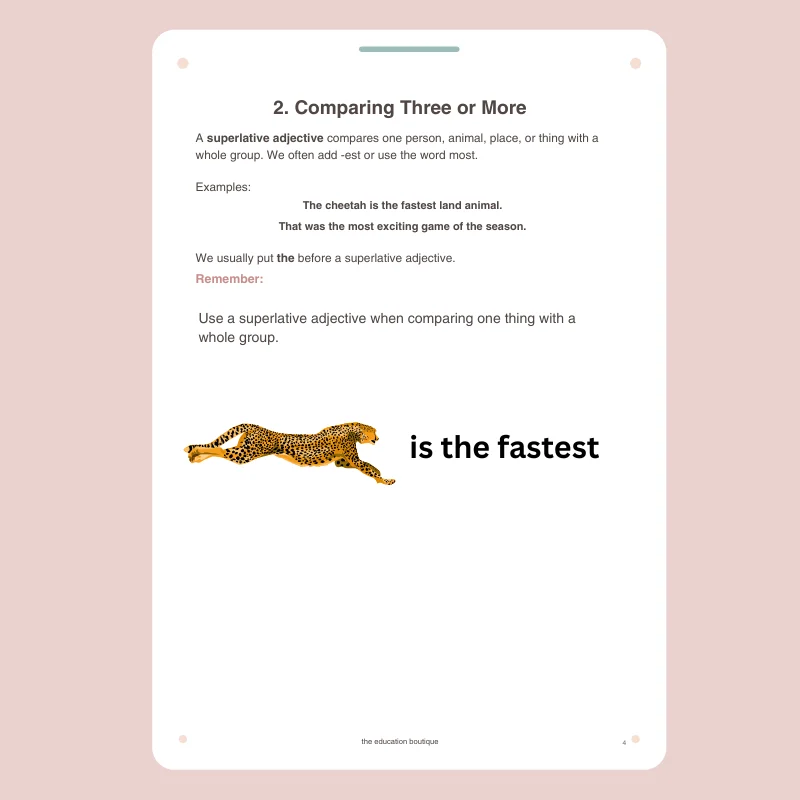
This form is used to compare three or more things, typically formed by adding ”-est” to the end of the adjective or using ”most” before it.
- Example: tallest (from tall)
- Example: most beautiful (from beautiful)
Examples in Sentences
- Positive: She is tall.
- Comparative: She is taller than her brother.
- Superlative: She is the tallest in her class.
Common Patterns
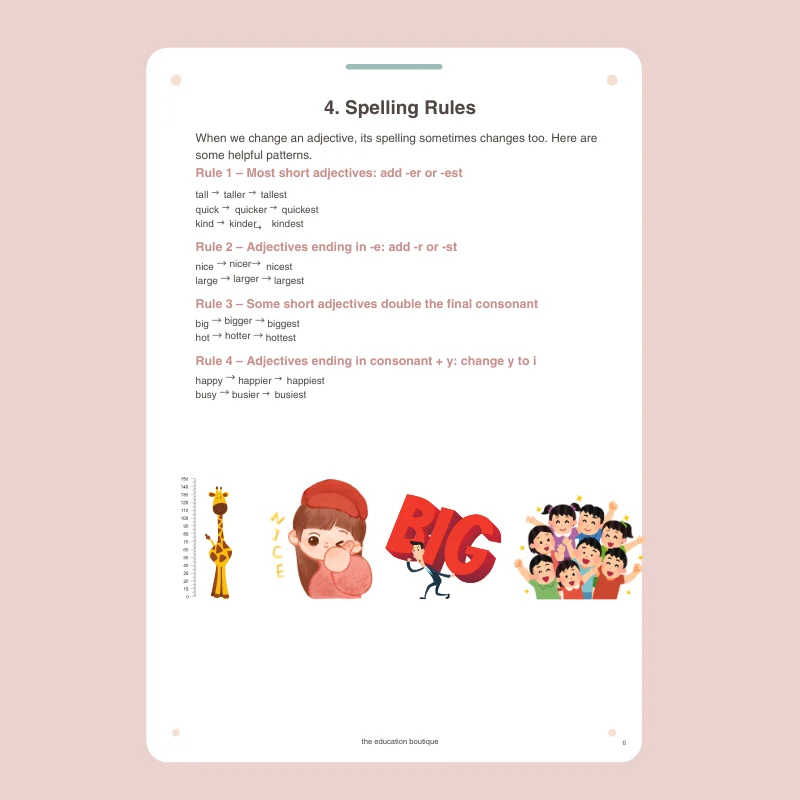
- One-syllable adjectives: Add ”-er” for comparative and ”-est” for superlative.
- Example: fast, faster, fastest
- Two-syllable adjectives ending in -y: Change the ”y” to ”i” and add ”-er” or ”-est”.
- Example: happy, happier, happiest
- Two-syllable adjectives not ending in -y and adjectives with three or more syllables: Use ”more” for comparative and ”most” for superlative.
- Example: careful, more careful, most careful
Understanding these degrees of comparison can enhance your writing and speaking by allowing you to express nuances in quality and quantity effectively.