
1. Basic Rules
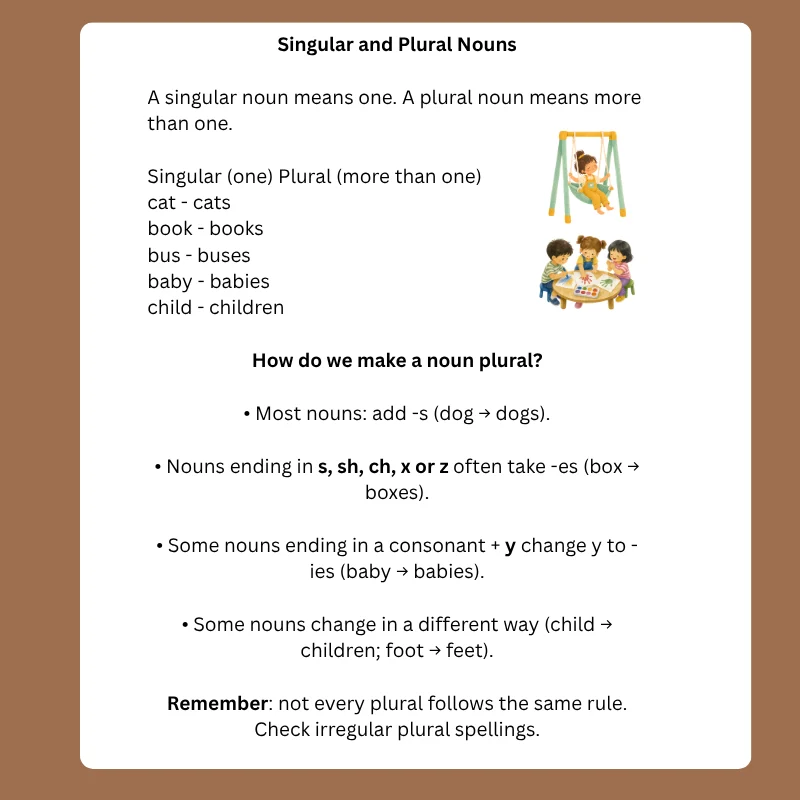
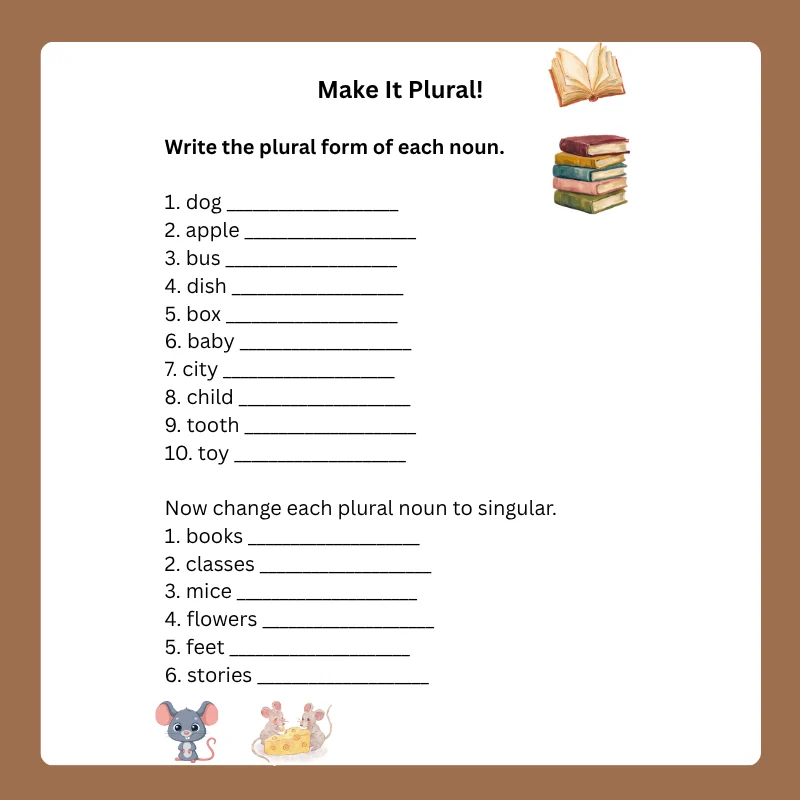
- Add -s: For most nouns, simply add an ”s” to make it plural.
- Example: cat → cats, dog → dogs
- Add -es: For nouns ending in -s, -x, -z, -sh, or -ch, add ”es”.
- Example: bus → buses, box → boxes
- Irregular Nouns: Some nouns have unique plural forms that you need to memorize.
- Example: man → men, woman → women, child → children
2. Visual Aids
- Use flashcards with pictures to associate singular nouns with their plural forms. This can help reinforce memory through visual learning.
3. Practice with Games
- Engage in word games like crossword puzzles or matching games that focus on singular and plural nouns. This makes learning interactive and enjoyable.
4. Use in Sentences
- Practice writing sentences using both singular and plural forms. For example: ”The cat is sleeping” vs. ”The cats are sleeping.”
5. Songs and Rhymes
- Find songs or create rhymes that include singular and plural nouns. Music can make memorization easier and more fun!
6. Group Activities
- If you’re learning with others, create a group activity where you can quiz each other on singular and plural forms.
7. Consistent Practice
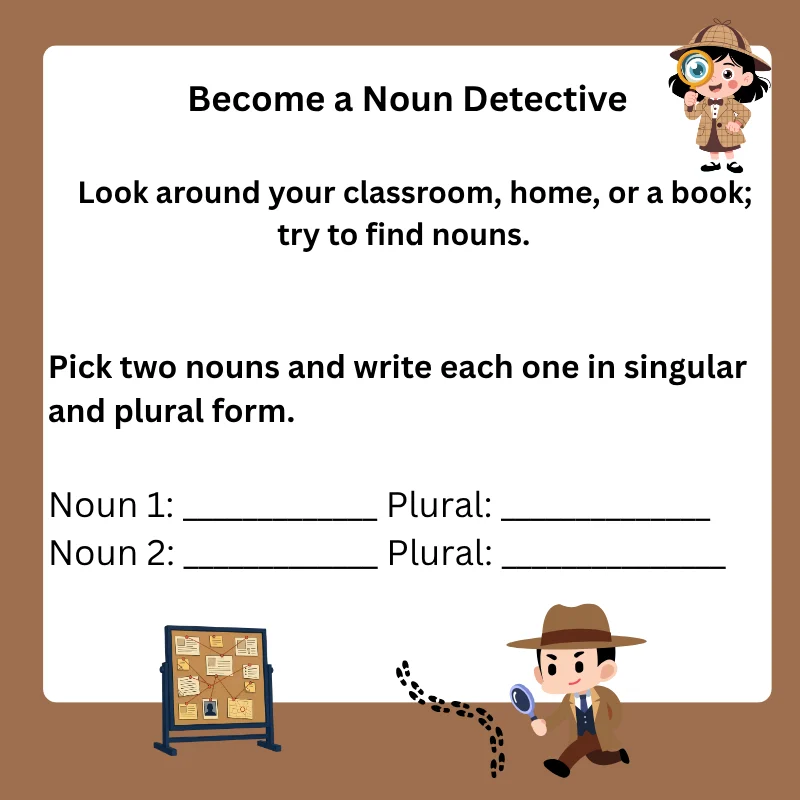
- Regularly practice by reading books or articles, paying attention to how nouns are used in both forms.
By incorporating these methods into your learning routine, you’ll find that mastering singular and plural nouns becomes much easier and more enjoyable! Happy learning!